
The 2025 Harvest From Our Plot - a Fabulous Year
Despite this year being the warmest summer on record, with very low levels of rainfall, our plot has produced some excellent harvests. In particular fruit and nuts have been plentiful and the real lesson is once again that perennial plants are proving much more resilient and much more efficient to produce than traditional allotment style annual plants.
In this piece I list the different edible species we have grown and foraged all from our sustainably managed plot where no chemicals or pesticides of any kind have been used for at least nine years. I have included some links to recipes most of which are very simple and make sure that gluts can be preserved and used over a longer period of time.
Note: the Met office has confirmed that 2025 has been the warmest summer on record with average temperatures between June and August of 16.1C beating the second placed year of 2018 at 15.76C and pushing 1976 (I clearly remember this as a spectacular summer and very hot particularly in the summer holidays whilst traveling in South Wales with my Father on a climbing trip) down into the fifth warmest summer on record.
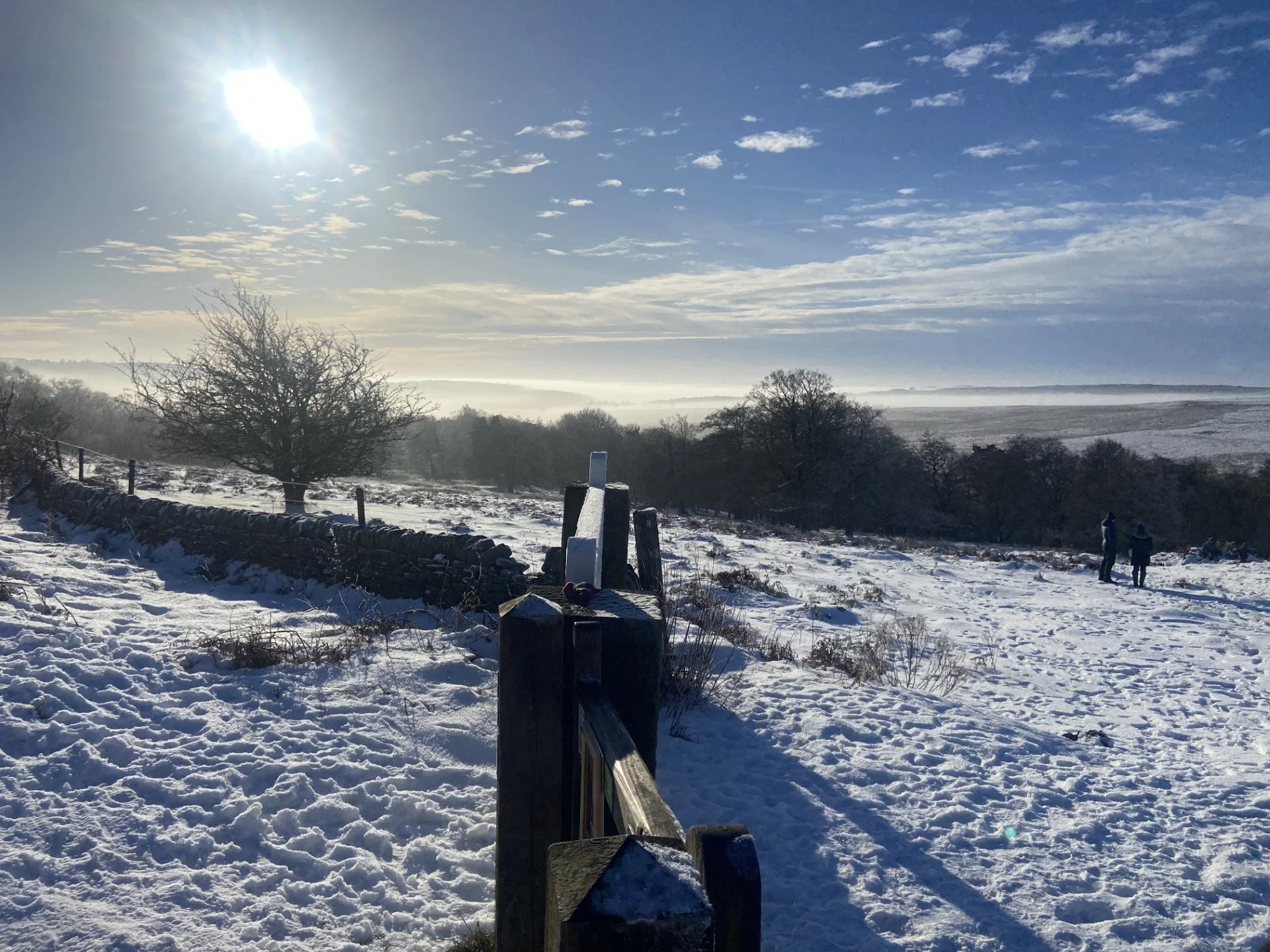
Bright sunshine over Big Moor in January 2025 - little did we know how much sun was to come in ‘25!

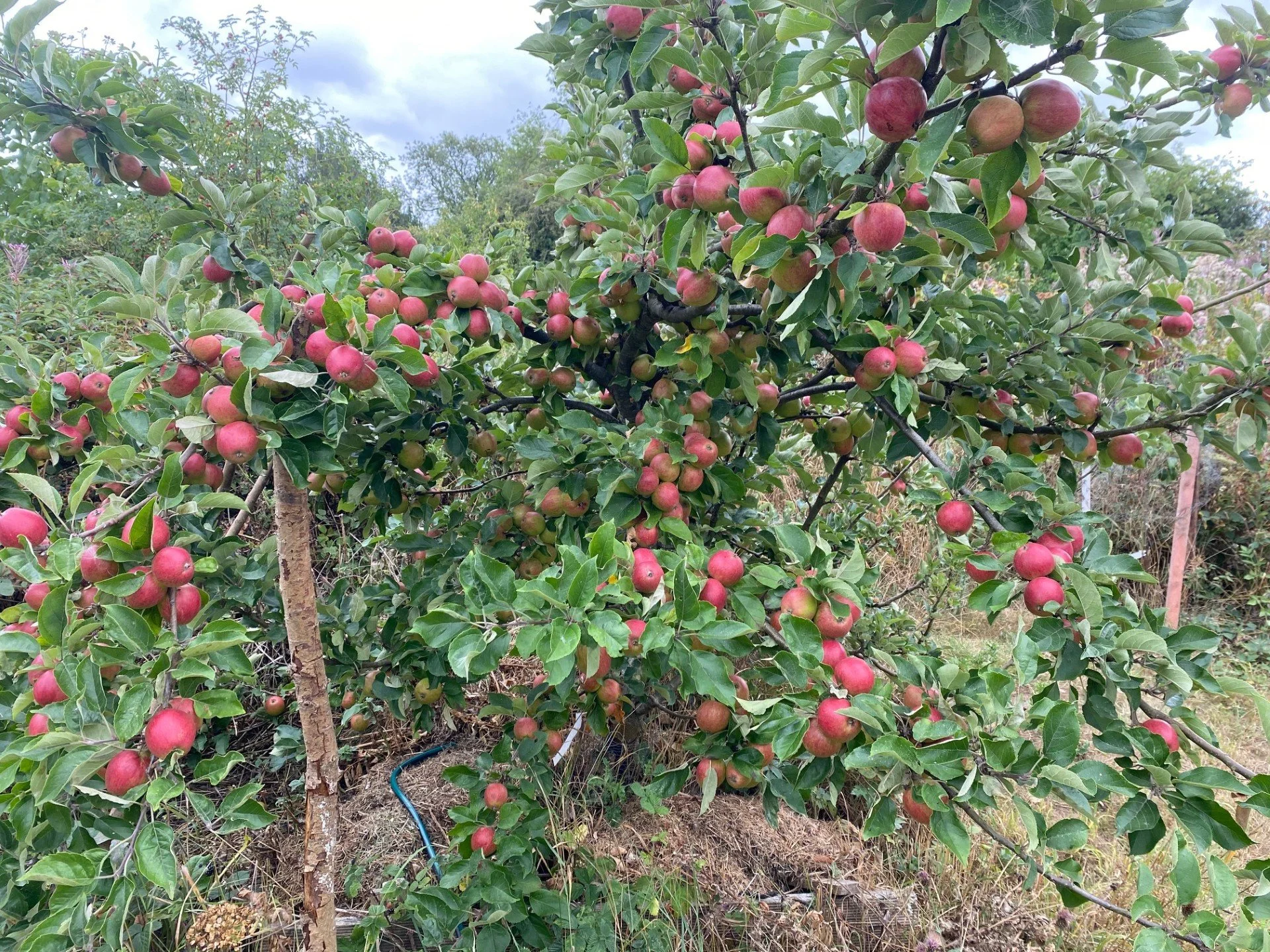
As the Spring progressed and the apple blossom appeared it was apparent that as long as late frosts did’nt interveen that this could be a good fruit year. The pollinators including our own honey bees were able to be very active in the warmer temperatures and you can see how the blossom progressed to abundant fruit on this Rajka apple tree
My Style of Growing.
The description of an untidy approach doesn’t really come close to describing my approach to sustainable growing! The plot is big enough to have a lot of areas which are left to grow wild and these are a wildlife magnet. Attracting beneficial pollinators and other insects which then predate on pests is a great help and a very much a better way to manage pests than reaching for the chemicals. In addition we have four ponds, native trees like alder which are great nitrogen fixers and areas planted with wild meadow flowers. We have a forest garden section with low growing fruit bushes, ground cover herb plants and then larger fruit and nut trees. The idea here is to create a self-sustaining area where the only real work is harvesting. Other than that some pruning and mulching is all that is required. Even the poor old lawn goes way beyond a no mow May!
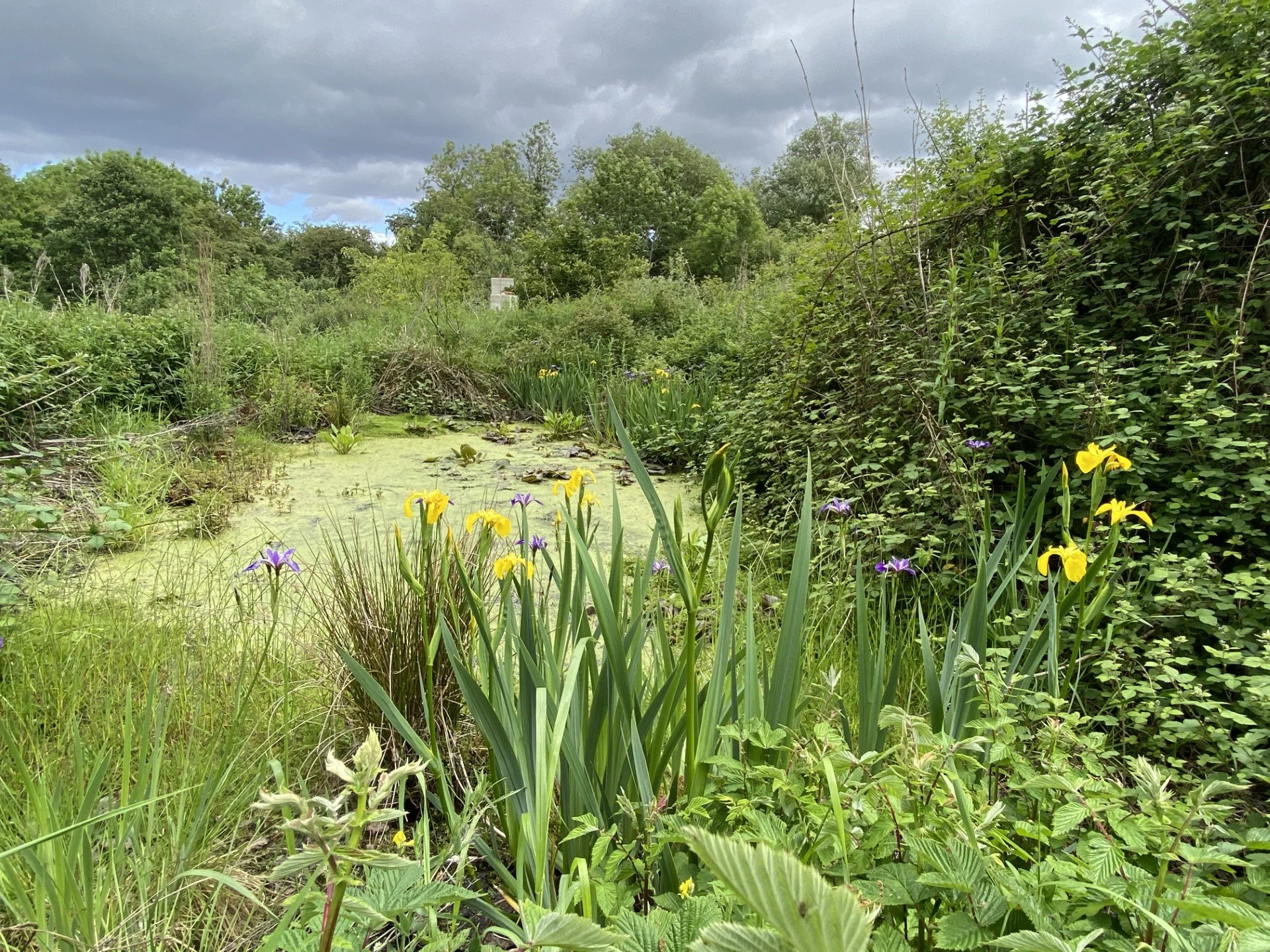
The larger pond with abundant wild flowers and wildllife habitat

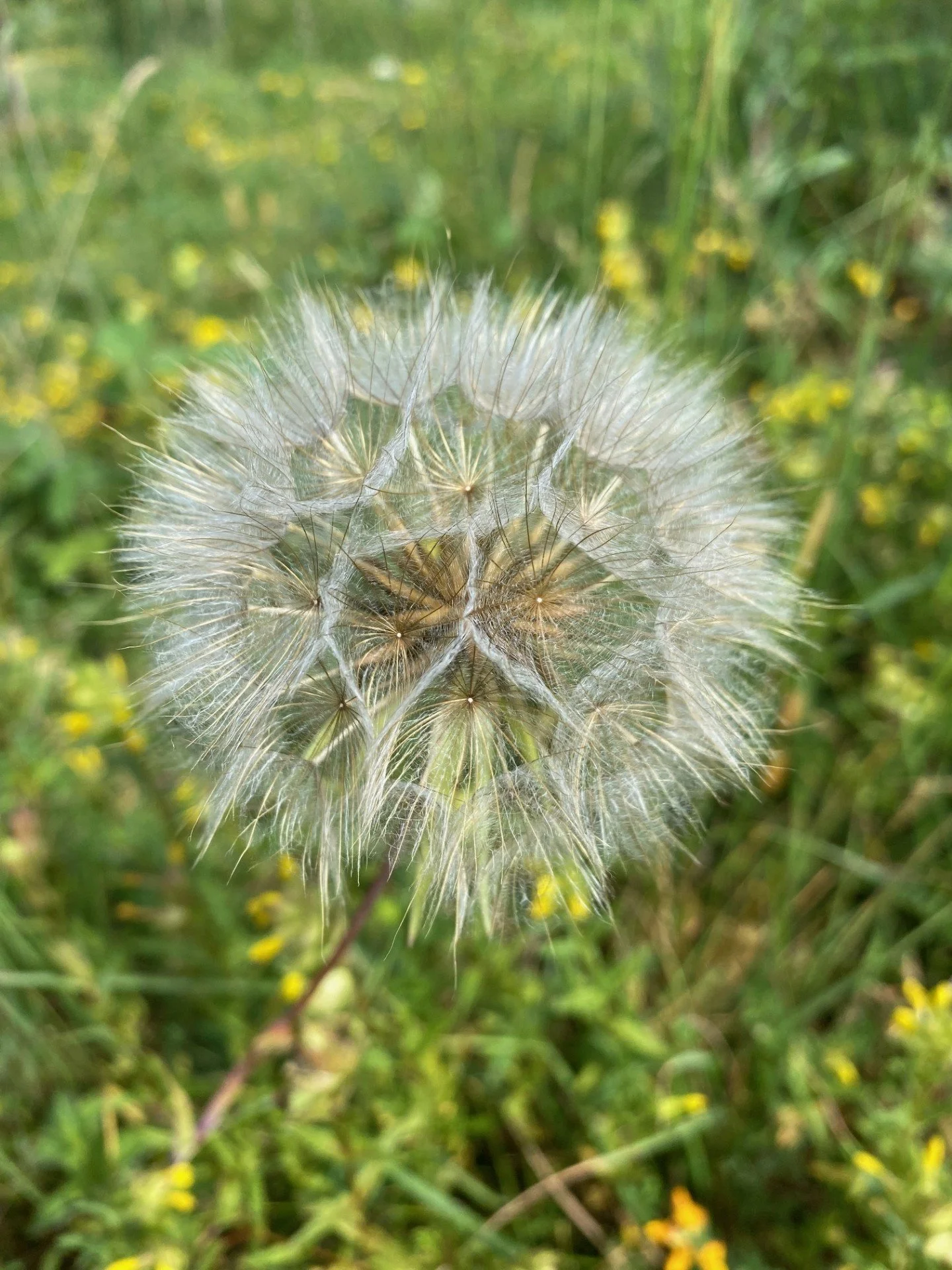
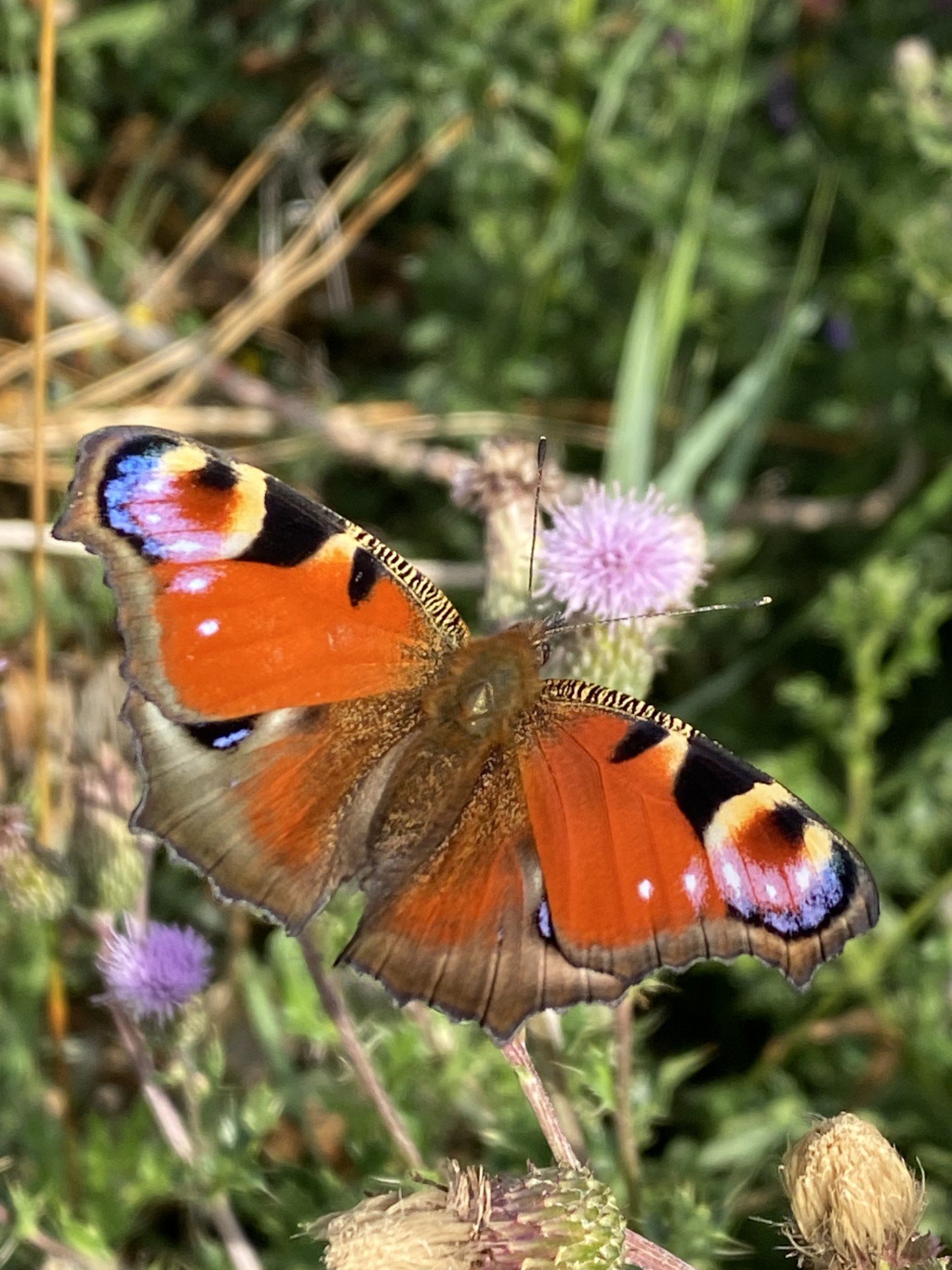


Wildlife - from top left. Grey Dagger caterpillar, Meadow salsify (Tragopogon pratensis), Peacock butterfly, Roe Deer (not great for young trees), Cinnabar caterpillars, Ashmeads kernel apple with ladybirds
Notable Harvests in 2025
Nuts:
Walnuts (three varieties – Frenette, Ronde de Montignac and a sapling a friend brought back from Bulgaria!))
Hazelnuts (Webbs Prize Cobb and Pearson’s Prolific)
Heartnut – related to the walnut tree and originating in Japan
Recipe for Pickled Walnuts (or Heartnuts)
Squirrels are a big issue and only a few mature nuts escaped their grasp. I did manage to collect some of the green heartnuts and pickled these. In the future I think this will be the way to go with all the nuts as the pickles are excellent and potentially give a higher value product than waiting for the mature nuts.


Heartnuts fresh and then pickled. These were picked in the “green” state but a little too late as the nuts were already starting to form within the shell. Next year I will aim to harvest the green nuts in late June to beat the squirrels.
Herbs and flowers used for garnishing our Sheffield delivered office buffets, wedding events and food for BBQ’s and private parties.
These are efficient for me to produce as in the case of the first five there are perennial so come back each year with no effort and the Nasturtiums and Borage this year all came from plants which had self-seeded from last year’s plants. So again, just needing some tidying up and some mulching with compost. Most of the compost I use comes from all the organic waste generated in our kitchen. This is collected daily and within 6 months is ready to re-cycle. The bonus is that occasionally lost pieces of cutlery and vegetable peelers also drop out at the end of the process!
Rosemary ·
Sage ·
Sweet Cicely
Salad Burnet ·
Red Veined Sorrel ·
Nasturtiums ·
Borage
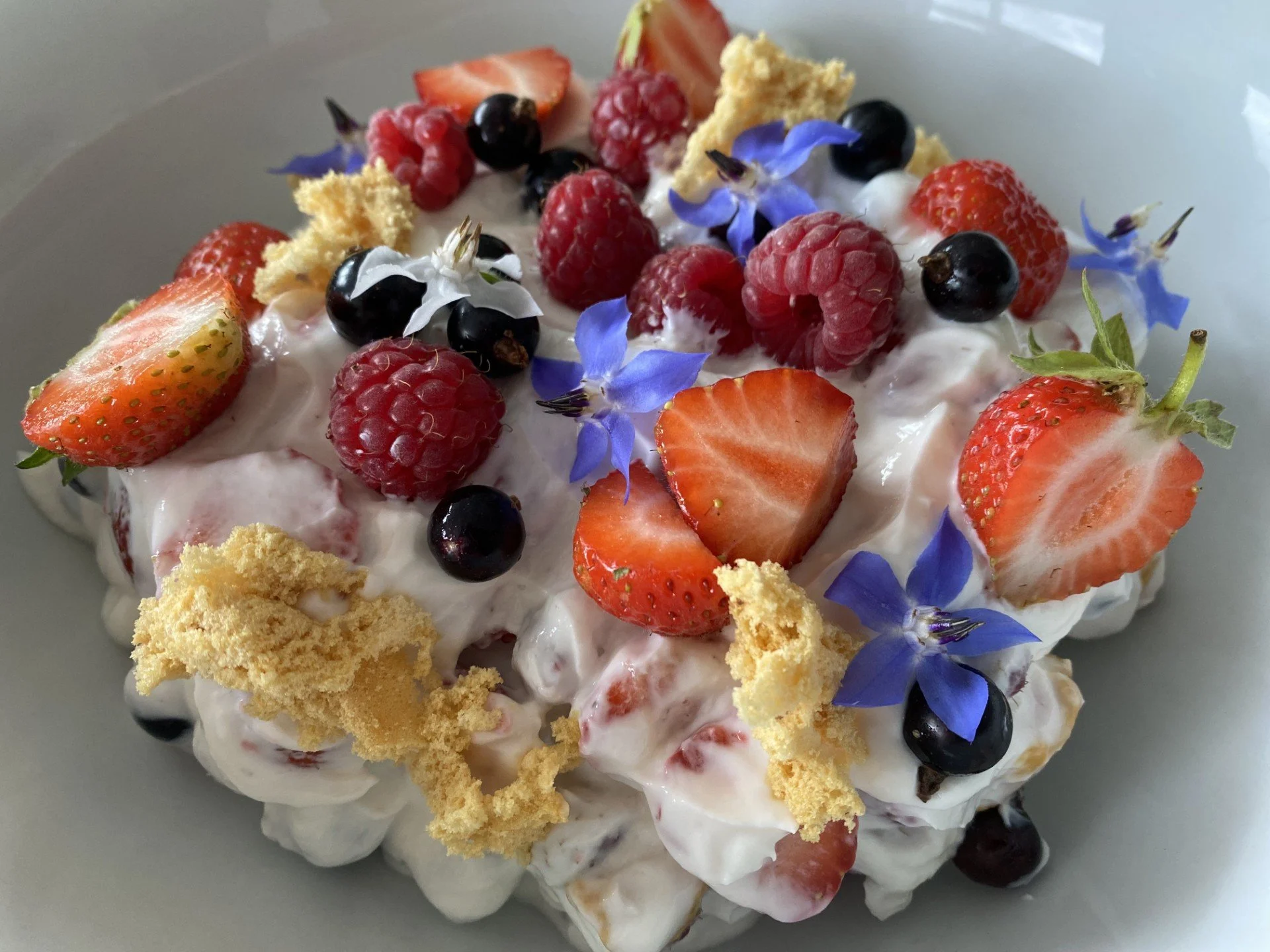
Eton mess with fruit from the plot and blue and white borage flowers
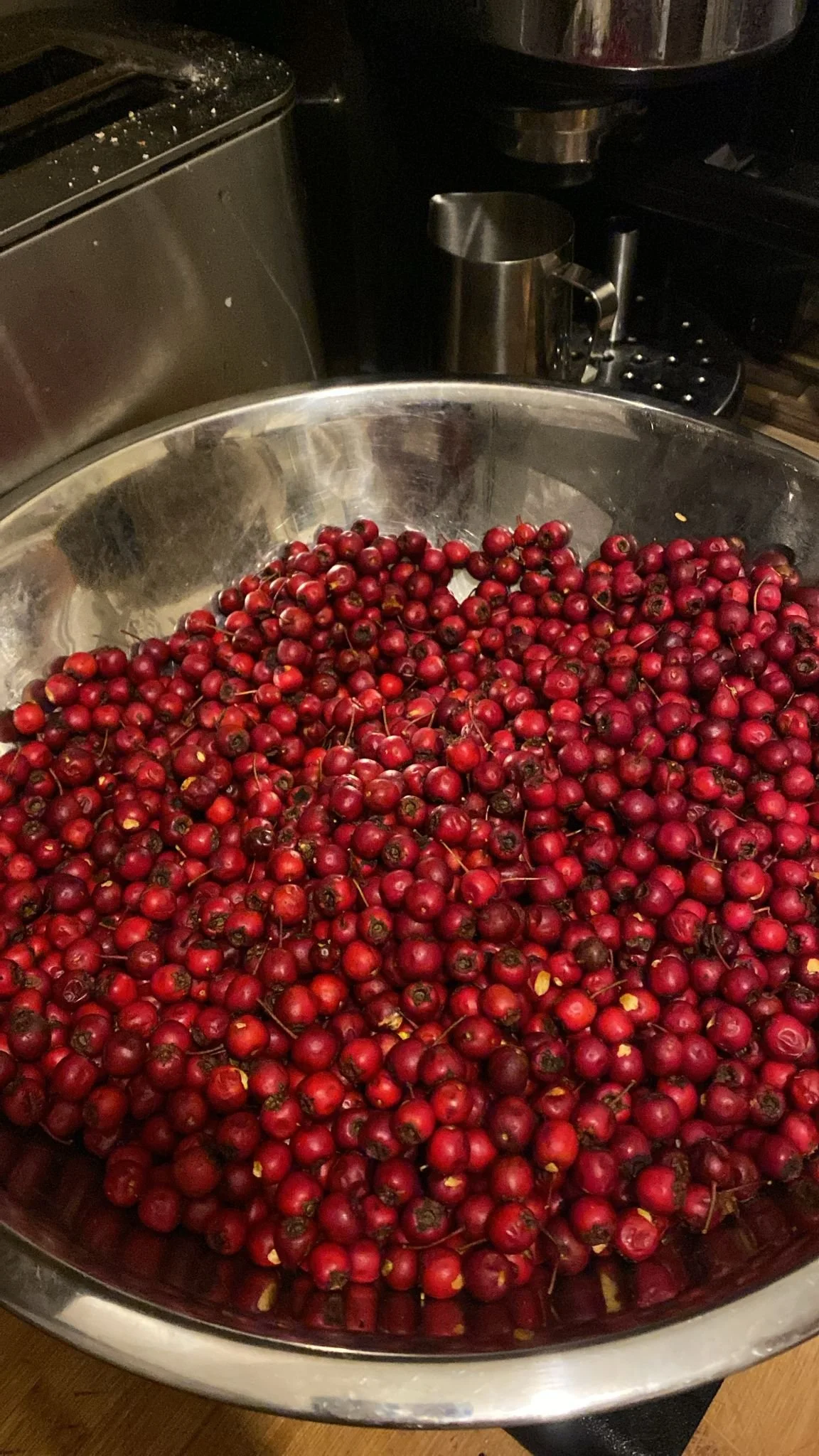
Wild plants foraged from the plot and used for a variety of recipes including elderberry vinegar, hawthorn ketchup, wild garlic and nettle pesto and well as the excellent nettle and potato soup. See the links for recipes.
Nettles (potato and nettle soup, nettle tempura)
Wild Garlic pesto, soups, garnish, wild garlic butter)
Common Hogweed (young shoots as a quick fried vegetable)·
St Georges Mushrooms (a late April early May treat)·
Elderflower and Elderberries (Elderberry Vinegar, Elderflower Champagne) ·
Hawthorn Flowers and Berries (flowers to nibble and the berries for the amazing Hawthorn Ketchup)·
Oxeye Daisy (a beautiful garnish for afternoon teas)·
Blackberries – jams, purees, Eton Mess, puddings.·
Rosehips – rosehip syrup
Perennial trees, bushes and roots. Click on the links for recipes.
·Apples (at least 12 varieties – used fresh, juiced for cider or as a wonderful blended apple juice, dried into apple crisps, purees, puddings and tart tatin).
Pears (4 varieties – used fresh, dehydrated for pear crisps, puddings)
Quince (2 varieties – used for Membrillo an amazingly fragrant quince paste, fruit leathers, baked as a dessert with dried fruit, spice and butter).
Medlar – eaten fresh when bletted or for medlar and walnut fruit loaf, medlar sticky toffee pudding.
Autumn Raspberries – fresh and in Eton Mess
Blackcurrant, Redcurrant, Gooseberries – keep really well frozen to use through the year for fruit pots, Eton Mess, purees
Szechuan Peppercorns – use in place of black pepper – a spicy, hot sensation which sets your lips vibrating!
Rhubarb – and custard!·
Horseradish – fresh horseradish sauce
Barberries – dried to add into muesli mixes.
Oyster mushrooms grown on logs left under apple trees.


As well as a fabulous year for fruit it turned out to be a brilliant Autumn for fungi. The king of mushrooms are Porcini (Penny Buns) and these this year lived up to their description in some guides as a common mushroom. From top left: Kidds Orange Red apples, giant puffball, Medlar, Porcini, Quince, Rajka apple.
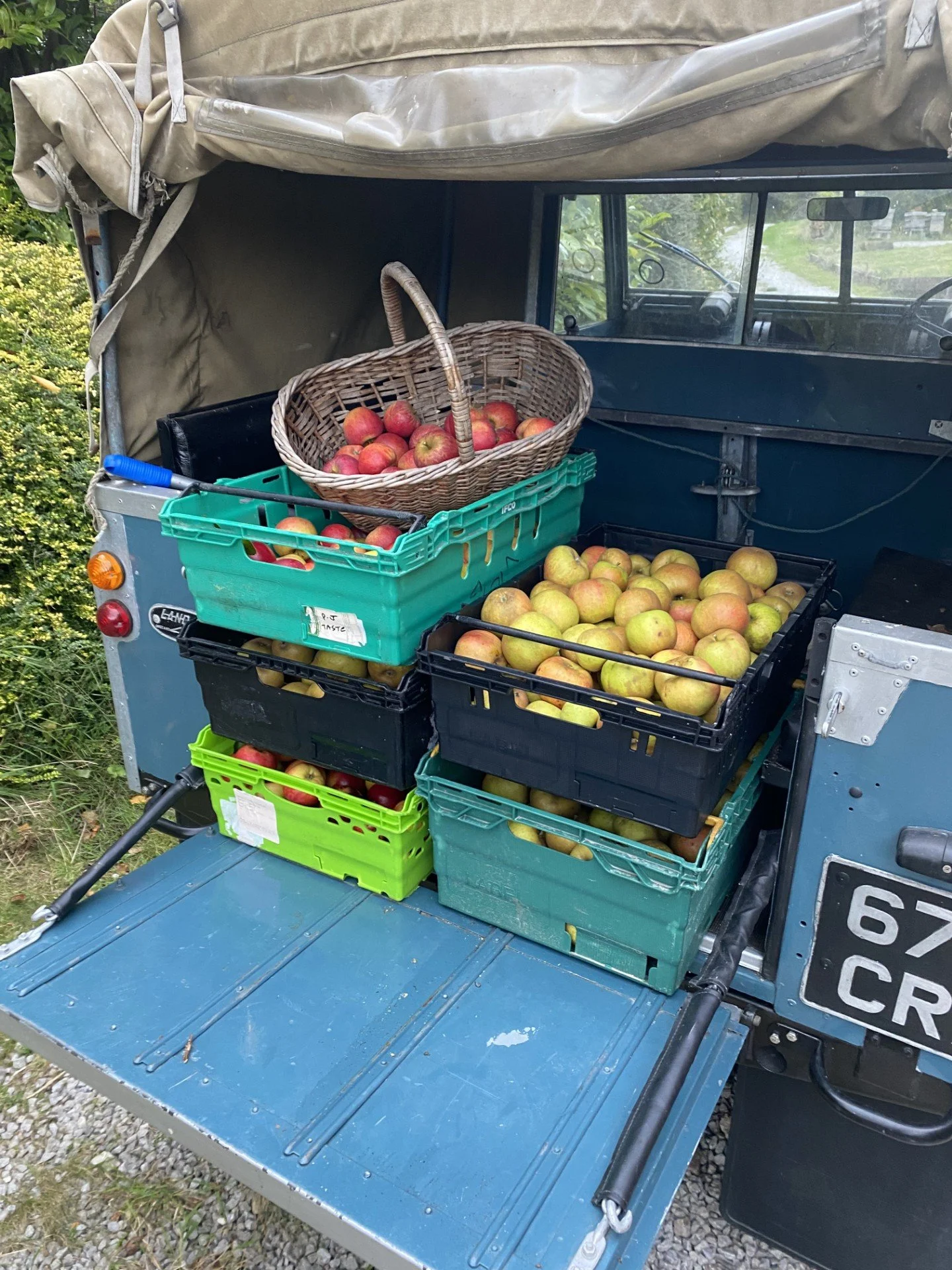

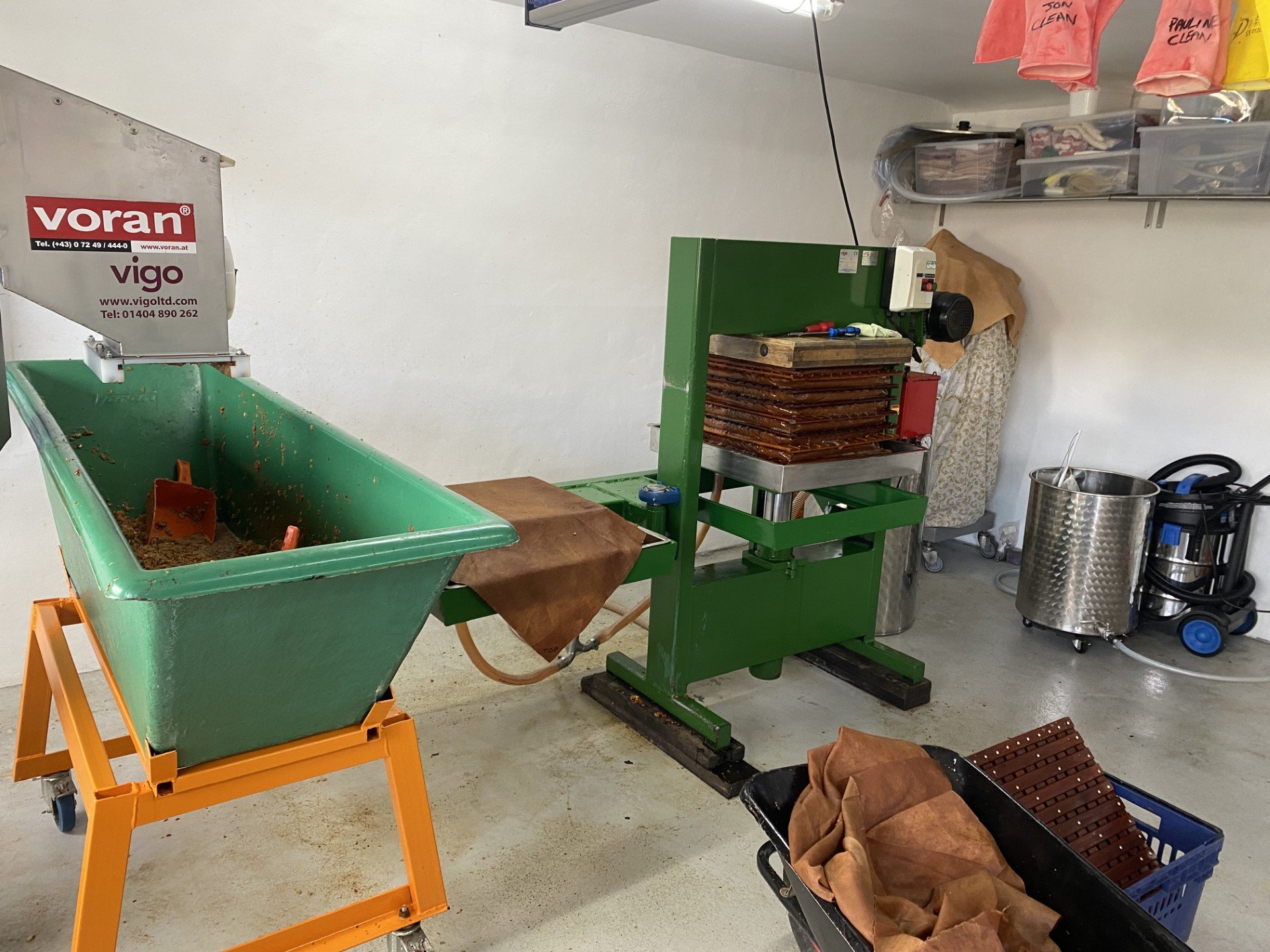
With an apple harvest approaching one ton in weight we were able to use them in a wide variety of recipes as well as having a quantity juiced. We took some to the Wolds Juice Company and some to Hillfield Nursery. Both operations are able to wash, efficiently mill and juice the apples before bottling and pasteurising to give an eighteen month shelf life.
Our heritage apple juice is available to our guests online here
Annual Vegetables. These are the harder work requiring careful propagation and intensive care to get established and nurse through to flowering and hopefully a good harvest. With so little rain until very late summer this necessitated plenty of watering and in the case of the squash culminated in a very poor harvest.
Squash
Potatoes
Peas
Chard
Runner beans
Tomatoes
How did our Honey Bees do in 2025 - continuing our ethos of treatment free bee keeping?
We actually started the year with only one colony of bees having used no chemical treatments for the last two years. Partly as a result of deliberately reducing numbers from a height of approximately 25 hives (2 or 3 years ago) to make things more manageable and partly due to winter losses. The winter losses (I lost three hives) may well have be due to those hives being unable to cope with the consequences of Varroa mite. By going treatment free and not using any chemicals (so no synthetic acaricides treatments or even the natural treatments obtained from natural sources like oxalic acid or Thymol which are still essentially chemicals) we are relying on the bees to build up natural defences to the Varroa mite. It has been proved that the bees can adapt and that breeding from the colonies with the genetics favouring this strength can over time produce resistant bees.
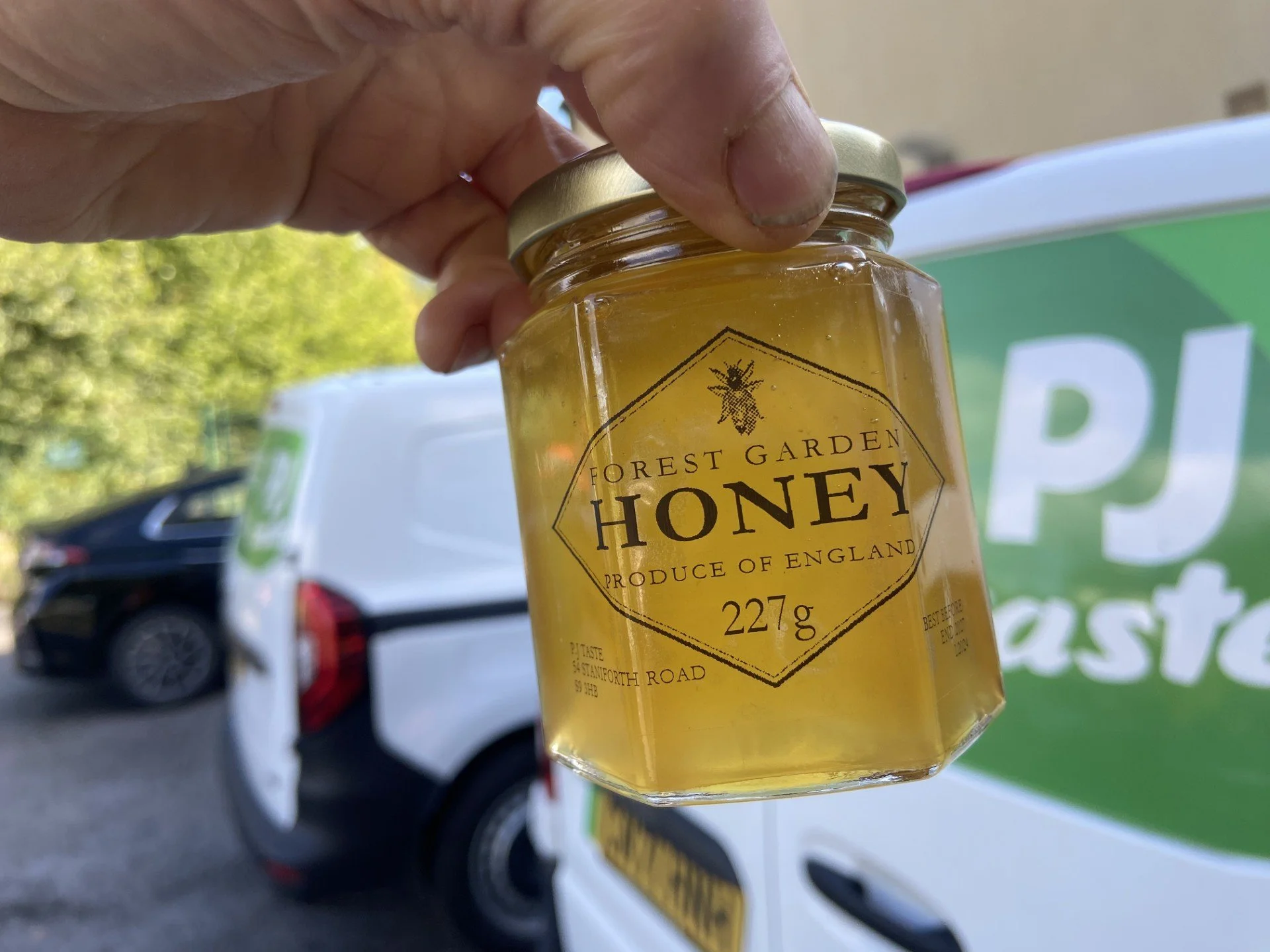
Our honey is available online or in person at 54 Staniforth Road.
By the year end I have built the hive numbers back up to six. This is as the result of splitting three hives and gaining three bonus swarms which all obligingly moved straight into empty vacant boxes. The splits were the most basic bee keeping intervention of removing frames of eggs, larvae and nurse bees to a new starter box. The idea is that realising they have no queen the bees create emergency queen cells from some of the very young larvae and develop their own new queen. Once emerged the virgin queen needs to undergo a perilous mating flight the only time she will leave the hive unless she leaves as part of a natural swarm later in her life.
Watching a swarm coming in is quite an experience and I captured one this year making its way into a pile of empty boxes.
In terms of honey production it was surprisingly good considering the low numbers of hives and the fact that they were needing to spend most of the early part of the year building up their numbers and ability to store honey. However, its good to have even a little honey considering the other great benefits the bees bring to the plot.